|
Copyright and reproduction policy Yours truly |
books, and other resources Contents (click on one): Archives Astro Books & Manuals Astro Films Beginners Advice Collimation Color Balance Databases Dew Busters Drift Alignment Equipment Reviews Exposure Great Astro Web sites Great terrestrial Photo Web Sites Hardware sources Home Observatories Image Processing Latitude & Longitude Mirror Recoating Newsgroups ST-4 Guider Sunrise, etc Times Videos Note: This portion of the site is very incomplete—I'm working on it!
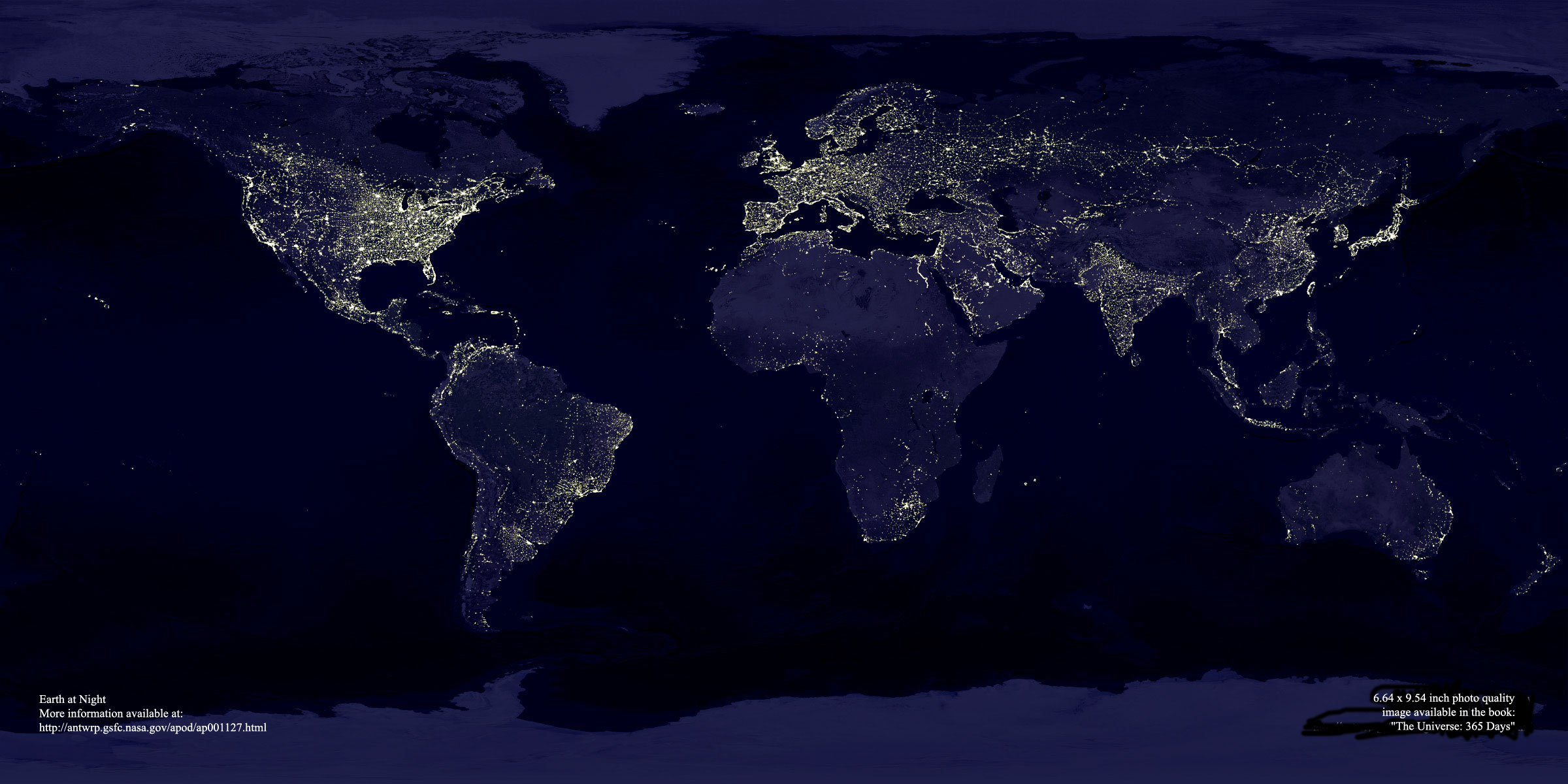
The sources listed here are limited to those I have personally read, watched, or linked to over the past 6--8 years, so it's a short list that doesn't reflect the fantastic amount of material available. darksky and light pollution matters The pollution of the night sky with useless, damaging light is perhaps the most important environmental/political issue facing astronomers, especially amateurs — who cannot travel to Hawaii or Chile on a monthly basis. The International DarkSky Association is working to educate city planners, lighting companies, highway engineers, etc, about the facts. Read about their activities and join the organization at: http://www.darksky.org/ If you have any doubts about the need for this organization, take a look at: http://antwrp.gsfc.nasa.gov/apod/image/0011/earthlights_dmsp_big.jpg
Amateur
Astronomy Books And Manuals:
"The Backyard Astronomer's Guide" by Terence Dickinson and Alan Dyer "Burnham's Celestial Handbook," by Robert Burnham, jr. (three volumes) "Astrophotography for Amateurs," 2nd edition, by Michael A. Covington "Wide-Field Astrophotography," by Robert Reeves "The New CCD Astronomy," by Ron Wodaski "The Night Sky Observer's Guide," by G Kepple & G Sanner (two volumes) "A Manual of Advanced Celestial Photography," by Wallis and Provin "Star Testing Astronomical Telescopes," by Harold Suiter "Small Observatories," by Patrick Moore "StarWare," 3rd edition, by Philip S. Harrington "365 Starry Nights," by Chet Raymo "Observer's Handbook," published annually by the Royal Astronomical Society of Canada (highly recommended!) "Astronomical Calendar," published annually by Guy Ottewell
Other Books: If you are interested in pharmacology, there's really only one choice: "Basic & Clinical Pharmacology," by B. G. Katzung
"An Introduction to Astronomy" by Alex Filippenko (UC Berkeley). 40 lectures on 15 tapes; distributed by The Teaching Company. Very good and definitely worth the money! "Einstein's Relativity and the Quantum Revolution: Modern Physics for Nonscientists" by Richard Wolfson (Middlebury College). 24 lectures on 6 tapes; distributed by The Teaching Company. An odd style of delivery and low information content, at least in the first 12 lectures, made this course hard for me to watch. I stopped watching after the 12th lecture so it wasn't worth it for me. Your response may differ. ======== and Special Interest Group PagesGeneral and very extensive listing of deep-sky objects (but requires some knowledge to use efficiently): http://adsabs.harvard.edu/abstract_service.html The best source of coordinates, size, distance, etc: The Interactive NGC Catalog Online at http://www.seds.org/~spider/ngc/ngc.html Hubble Space Telescope: http://www.stsci.edu/ Occultation information: http://lunar-occultations.com/iota/iotandx.htm Lists of astronomy clubs: http://www.lpl.arizona.edu/~rhill/alpo/clublinks.html APML (Astrophotography Mail List for FILM photography only; not sure it exists anymore) archive at: http://astro.umsystem.edu/apml/ CCD Imaging list (very good, active group for advice and help on all matters pertaining to astro-imaging with dedicated astro-CCD and -CMOS cameras: http://taex001.tamu.edu/mailman/listinfo/ccd Astroimaging with a digicam (non-interchangeable lens digital camera): http://groups.yahoo.com/group/digital_astro/ MAPUG (Meade Advanced Products Users' Group) archive at: http://www.mapug.com Doc Greiner's web site: http://www.mailbag.com/users/ragreiner/ Messier Objects, Messier Marathon materials: http://www.seds/org/messier/ and
especially: http://www.seds.org/messier/xtra/marathon/marath.html And another good source (Bill Ferris): http://members.aol.com/_ht_a/billferris/marathon.html Solar system: http://www.seds.org/billa/tnp/ and http://www.jpl.nasa.gov/pictures/ ========= ========= I find that regular reading of the postings to these newsgroups is the quickest way to obtain information about new equipment and techniques. Don't hesitate to post questions. The people who populate the groups are usually extremely helpful to beginners and are happy to share their expertise. If your question has recently been answered someone will usually direct you to the archive page containing the answer. Astro-Physics telescopes: http://groups.yahoo.com/group/ap-ug Astro-Physics mounts: http://groups.yahoo.com/group/ap-gto/ Astrophotography Mail List: APML (see archive above for subscription information) CCD Imaging list (very good, active group for advice and help on all matters pertaining to astro-imaging with dedicated astro-CCD and -CMOS cameras: http://taex001.tamu.edu/mailman/listinfo/ccd CCD-newastro (Ron Wodaski's group): http://tech.groups.yahoo.com/group/ccd-newastro/ Finger Lakes Instrumentation (FLI) CCD cameras and accessories: E-mail listserver@propermotion.com with the message: subscribe digest fliuser Losmandy mounts and accessories (Losmandy) group: http://groups.yahoo.com/group/Losmandy_users Meade Advanced Products Groups: MAPUG (see archive above for information) Santa Barbara CCD cameras and accessories (SBIG) group: http://groups.yahoo.com/group/SBIG ========= Polar alignment methods (iterative & drift) Philip Perkins: http://www.astrocruise.com/; go to bottom of opening page for articles, eg: http://www.astrocruise.com/polarold.htm; and http://www.astrocruise.com/polarnew.htm
Chris Vedeler's excellent article: http://www.isomedia.com/homes/cvedeler/scope/focus.htm Doc Greiner's archive: http://www.mailbag.com/users/ragreiner/ Chuck Vaughn's excellent article: http://www.aa6g.org/Astronomy/articles.html ; click on Knife Edge Focus. Jerry Lodriguss' exhaustive
treatment at: http://www.astropix.com/HTML/I_ASTROP/TOC_AP.HTM
, click on Focussing for astrophotography, or just go direct to: Focusing
for Astrophotography:
Focus methods for CCD: FocusMax is a free and sophisticated autofocus software plug-in for use with MaxIm: http://www.focusmax.org ================================== Color Balance & Reciprocity of films: Don Westergren's "lab" tests: http://home.nethere.net/mpd/FilmTestSummary/FilmTestSummary.htm
Color Balance and Correction Factors for CCD Al Kelly's website, and his tutorial on the G2 star method of calibrating a CCD-tri-color filter system: http://www.ghg.net/akelly/ Don Goldman's website on tricolor filters used in CCD and a calculator for determining the characteristics of your own system: http://www.astrodon.com/ =========================== ========= http://perso.club-internet.fr/legault/collim.html
============ General: http://www.covingtoninnovations.com/astro/ For deep-sky objects see also: Philip Perkins's site at http://www.astrocruise.com/astroexp.htm Meteor photography: Jerry Lodriguss' article at http://www.astropix.com/HTML/I_ASTROP/METEORS.HTM ============ http://aa.usno.navy.mil/AA/data/docs/RS_OneYear.html ========== Latitude and Longitude for observing locations
http://www.mapug.com/AstroDesigns/MAPUG/LatLong.htm If you have a street address, this site is
great: For UK (for London especially) http://www.streetmap.co.uk/ ======== This stand-alone guider, now discontinued, continues to work well for those lucky enough to own one. Optimal performance is not always easy to achieve, so reference to Jim Janusz tutorial is highly recommended:
Jim Janusz: www.abmedia.com/astro/articles/st4.html
Jim Janusz (on Philip Perkin's site): http://www.astrocruise.com/st4tips.htm ========== Source of hardware, Metals, Plastic, Etc: http://www.reidtool.com/index.htm (especially good for small set screws, knobs, etc) ======== ========= Sources of Software: A listing of sources: http://www.seds.org/billa/astrosoftware.html
The source of the selective gaussian blur noise reduction program (SGBNR) http://www.pleiades-astrophoto.com/software/en.html Recommended! ======== ALUMINUM COATING:
QSP Optical, Santa
Ana. Clamshell Roof (as developed by Eric Schandall) Katzung: this web site Roll-off Roof Vedeler: http://www.isomedia.com/homes/cvedeler/observatory/observ.htm Arnett: http://www.seds.org/billa/obs/obs.html Greiner: http://www.mailbag.com/users/ragreiner/ Dome ======= Evaluations of scopes, eyepieces, And Other equipment: Todd Gross' site: www.weatherman.com Ed Ting's site: http://www.scopereviews.com/ CloudyNights site: http://www.cloudynights.com/index.htm ======== ========= This site: http://www.astronomy-images.com/Articles/Astrophotography_for_beginners.htm ======== Digital Techniques For Processing Astrophotos Jerry Lodriguss: http://www.astropix.com/HTML/J_DIGIT/TOC_DIG.HTM Al Kelly's excellent tutorial on acquiring and processing CCD images: http://www.ghg.net/akelly/procccd.htm
Sophisticated techniques described and links to, at Russ Croman's site: http://www.rc-astro.com/resources/index.html ======== The most useful site is Attilla Danko's great "translator" of the Canadian astro forecasts noted below. It provides an hour-by-hour prediction of both cloud cover and transparency for several hundred selected observing sites across the USA and Canada: http://www.cleardarksky.com/csk/ The Canadians have an excellent page for amateur astronomers: http://www.cmc.ec.gc.ca/cmc/htmls/astro_e.html The northern tier of the US can be seen on these Canadian maps. This is a site predicting astronomical observing conditions in the USA and southern Canada : www.intellicast.com/Star/ You might also take a look at ======== Sources of data on nebula, clusters, and galaxies ..... There are hundreds of catalogs of such data with size, distance, brightness, etc, available for download at: Messier: http://www.seds.org/messier/ NGC, IC: http://www.ngcic.com/ Or: http://adc.gsfc.nasa.gov/adc/adc_holdings1.html Bill Arnett's solar system database: http://www.seds.org/billa/ Nasa's Lunar Orbiter moon database: http://www.lpi.usra.edu/research/lunar_orbiter/ Dutch Occultation Association Lunar Occultation Workbench, a great freeware program for predicting and precisely localizing the position of lunar occultations: http://home.plex.nl/~gottm/doa/ Web sites for great astrophotos (both film and ccd) and related (Listed alphabetically but pathetically incomplete ). There are lots more and I will attempt to add more over time. Dennis Anderson's aurora shots: http://www.auroradude.homestead.com/aurora.html and especially: http://www.auroradude.homestead.com/tokfebruary.html Howard Anderson: http://www.frontiernet.net/~handy13/ Steve Bell's site: http://www.mindspring.com/~sb635/
Matt BenDaniel's site (great images and tutorials): http://starmatt.com Rob
Gendler: http://robgendler.astrodigitals.com/index.html Tony and Daphne Hallas: http://astrophoto.com/
Jim Janusz: http://www.geocities.com/palmdesertratx/ Russ Lund: http://www.stargazing.net/coolastronut/ Bill McLaughlin: http://willmclaughlin.astrodigitals.com/ Bobby Middleton: http://www.koyote.com/users/bobm/astro1.htm
Wil Milan: http://www.airdigital.com/index.html Chris Schur: http://www.psiaz.com/Schur/astro/index.html Mike Stecker: http://www.homestead.com/mstecker/index.html Mike Stecker's collection of bios and pictures of amateur and professional astro-imagers: http://mstecker.com/pages/app.htm Interesting! Jeff Stys: http://www-personal.umich.edu/~jstys/index.html Chris Vedeler's: www.isomedia.com/homes/cvedeler/space.htm Volker Wendel's: http://www.spiegelteam.de/New%20Pictures.htm ===========Great Terrestrial Image Sites (Landscape, Nature, Etc) http://www.visionlightgallery.com/ (includes some of my own work!) http://www.fredmiranda.com/ (general photo forum, reviews of equipment, tutorials, etc) http://luminous-landscape.com/ (reviews, tutorials, etc) ====== Sources of film and photo accessories: B&H Photo Video (800-947-9002); http://www02.bhphotovideo.com/ Anyone considering a new photo printer should check out this and check the scanner article on the APML archive site: http://www.system.missouri.edu/ics/staff/andy/APML/scanner_test/ ==================
Here are some other web pages to get you started. ASTROPHOTOGRAPHY BASICS by Galaxy Photo Beginners Astro page Beginnings in Astrophotography! ASTROPHOTOGRAPHY PRIMER Barndoor tracking mounts (do it yourself solutions) http://origins.colorado.edu/~rachford/widefield/barndoor.html http://www.jlc.net/~force5/Astro/ATM/Barndoor/barndoor.html =========== Larry McNish has an extensive and authoritative article on all aspects of this phenomenon at: http://calgary.rasc.ca/field_rotation.htm Michael Covington's website has an applet that calculates this at: http://www.covingtoninnovations.com/astro/astrosoft.html
COLD CAMERA TECHNIQUES:
======== Astronomy resources in Northern California: General clearing house organization for clubs: http://aanc-astronomy.org Resources for teachers (teaching materials for grades K-12, books, etc): www.aspsky.org ========= Dew can be a major
problem whenever the air temperature drops close to the dewpoint temperature. To
prevent a dripping mess, you need to gently warm the area facing the sky with a
resistance element strapped around the lens or aperture and control it with some
sort of variable controller. For general principles see: I am aware of two commercial brands of good dew control heaters and controllers: DewBusters ( http://www.dewbuster.com/ ) and Kendrick's Dew Removal System ( http://www.kendrickastro.com/astro/index.html ). ======== Tricolor techniques: Color in most CCD work requires tricolor filter techniques; see Bill McLaughlin's site for an excellent tutorial: http://willmclaughlin.astrodigitals.com/; click Information, then on LRGB Technique Al Kelly, who has successfully popularized the G2 star technique for calibrating a CCD - tricolor filter system has a tutorial at: http://www.ghg.net/akelly/artdraf7.htm The majority of advanced CCD imaging is done with monochrome CCD cameras and thus requires the use of filter wheels for placing the three (or more) filters successively in front of the sensor. The major cooled CCD camera manufacturers (SBIG, Starlight Express, FLI, Apogee, Yankee) provide the necessary equipment for this, see the manufacturer links above or google. In addition, several manufacturers also provide "one-shot color" cameras. These cameras use color sensors (like the ones used in digital cameras for day use) and tempt the beginner as being simpler or cheaper. However, most one-shot color sensors are limited to the visible spectrum, and are much less sensitive to the important H-alpha wavelength. Furthermore, calibration and correction for artifacts is much more difficult when processing one-shot color frames. |